Are Listing Photos Real? California's 2026 AI Photo Disclosure Law and What Coachella Valley Buyers Should Ask
A buyer in Newport Beach writes an offer on a Palm Desert home she has never walked through. She is working from 34 photos. Three of them have been altered.
As of January 1, 2026, California requires that to be disclosed.
I have spent 21 years selling in the Coachella Valley, licensed under DRE #01455311, and a large share of my buyers shop this market from somewhere else. LA, Orange County, San Diego. For those buyers, photos are not marketing. Photos are the property. So a law about listing images is not a technicality here. It is the difference between an informed offer and a guess.
What does California’s AI photo disclosure law actually require?
Starting January 1, 2026, when a listing photo has been digitally altered or generated with AI in a way that materially changes how the property appears, the listing must disclose it. The seller or agent also has to make the original, unedited photo available.
Material changes include AI or virtual staging that places furniture in an empty room, removing power lines, utility boxes, or neighboring structures, enhancing or inserting a view that is not visible from that window, adding features the property does not have, and altering landscaping to look fuller or greener than it is.
Routine adjustments, brightening a dim room or straightening a crooked horizon, are not what this law is aimed at. It targets edits that change what a buyer believes they are buying.
Why does this matter more in La Quinta and Palm Desert than in most markets?
Because of who buys here.
A meaningful portion of Coachella Valley buyers are second-home buyers, downsizers, and relocators who start their search two to three hours away. Many write an offer before their first in-person visit, especially in summer when nobody wants to fly in to tour homes in 112-degree heat.
That buyer has no way to notice that the mountain view in photo 12 was enhanced, or that the neighbor’s RV was edited out of the driveway shot. They find out during the walkthrough, and by then they are emotionally and financially committed.
There is also a desert-specific version of this problem. Landscaping edits. A yard that looks lush and mature in photos can be sparse and struggling in person, and desert landscaping is expensive to fix. A green lawn in an image says something about water use and maintenance cost that a buyer from the coast will read very differently than a buyer who has lived through a valley summer.
What should a remote buyer ask before writing an offer?
Three questions. I would ask all of them on any listing, mine or anyone else’s.
Which photos were altered, and how? Do not accept a general yes. Ask for the specific images and the specific change. Then ask for the originals, which you are entitled to.
Was any room virtually staged? An empty room and a staged room read completely differently on a screen and identically to an appraiser. Virtual staging also hides scale. A sofa rendered slightly small makes a room look larger than it is.
What is directly outside the frame? This is the gap the law does not close. Photo disclosure covers what was changed in an image. It does not cover what was never photographed. Ask what is on the other side of the wall, what the neighbor’s yard looks like, and what you would see standing in the driveway facing the street.
Does this law protect me if I buy sight unseen?
Partly. It closes a real gap and gives you a right to the original images, which is meaningful.
It does not replace a video walkthrough, a good inspection, or someone physically standing in the house on your behalf. When I represent a remote buyer, I walk the property on video and narrate what the camera is not catching. Road noise. Sun exposure at the hour I am standing there. What the HVAC sounds like. Whether the neighbor’s pool equipment runs loud.
A disclosure form tells you an image was edited. It does not tell you how the house feels at 4 p.m. in August.
How does this fit with California’s other 2026 disclosure changes?
The photo rule is one piece of a larger expansion. Also effective in 2026: sellers must disclose known tobacco or nicotine residue and smoking history through the Transfer Disclosure Statement and Seller Property Questionnaire, and must disclose known state or local requirements around replacing gas-powered appliances that transfer with the property. AB 1280 adds high fire hazard zone and fire protection responsibility disclosures, and AB 968 requires reporting significant contractor work done within 18 months of the seller acquiring the property.
The direction is consistent. California keeps moving the line toward telling the buyer more, earlier.
Frequently asked questions
Is virtual staging legal in California in 2026? Yes. Virtual staging is legal. What changed is that it must be disclosed when it materially alters how the property appears, and the unedited original must be available on request.
Can I ask for the original listing photos? Yes. If images have been materially altered, California requires that the original unedited photo be made accessible. Ask your agent to request them in writing.
How do I know if a listing photo was edited with AI? You often cannot tell by looking, which is the reason for the law. Ask directly rather than trying to spot it. Look especially closely at views through windows, exterior landscaping, and any room that looks unusually spacious.
Is it safe to buy a home in Palm Desert without seeing it in person? People do it every week here. It works when you have someone walking the property for you on video, a thorough inspection, and honest answers about what falls outside the photo frame. It goes badly when photos are the only source of truth.
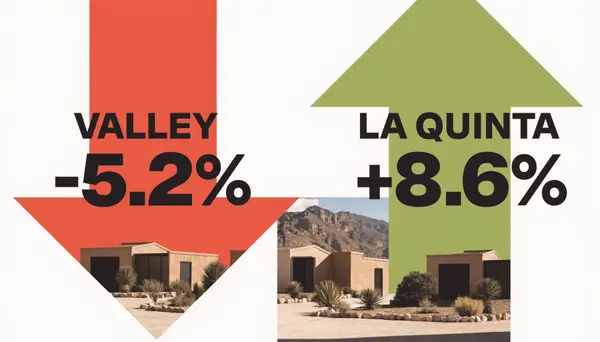
What are home prices doing in the Coachella Valley right now? The market has softened into what analysts are calling a lull, with listings sitting longer and buyers holding more negotiating room than they had a year ago. Specific numbers vary a lot by city and by community, so ask for data on the neighborhood you are actually considering rather than a valley-wide average.
The short version
The law is a floor, not a ceiling. Full disclosure was the right practice before January 1 and it will still be the right practice when the next imaging tool shows up.
If you are shopping the desert from the coast and want a straight read on a property before you commit, I am happy to walk it and tell you what I actually see. No pressure, no obligation.
Laura Lake is a licensed real estate agent (DRE #01455311) with 21 years of experience in the Coachella Valley. She specializes in La Quinta and Palm Desert, working with buyers, sellers, and investors throughout the desert communities. DesertRealEstatePartners.com
Categories
Recent Posts



GET MORE INFORMATION