
Why Your Zestimate Is Wrong on a La Quinta or Palm Desert Home (2026)
 You own a place in La Quinta or Palm Desert, and you live somewhere else. Newport Beach, maybe. Manhattan Beach. Rancho Santa Fe. Every few weeks you pull up your address on Zillow, look at the number, and let it set your expectations.
That number is probably wrong. Not a little wrong. Wrong in a way that costs real money when you finally decide to sell.
Steven Thomas (Quantitative Economics and Decision Sciences) built his entire August Riverside County Housing Report around this one subject: how inaccurate automated pricing has become.
For homeowners who turn to Zillow BEFORE listing their homes, the median error rate is 5.87%. That translates to a plus-or-minus $46,960 for an $800,000 Zestimate.
I want to explain why it happens here specifically, because the Coachella Valley is close to a worst-case scenario for an algorithm.
An algorithm prices what it can count
An automated valuation model, whether that is a Zestimate or a bank's internal tool, works off structured data. Square footage. Bedroom count. Bathroom count. Lot size. Year built. Recent nearby sales.
That works reasonably well in a tract subdivision where 400 houses share nine floor plans and the only real variable is condition.
It does not work here. Here is what it misses.
1. Land lease versus fee land
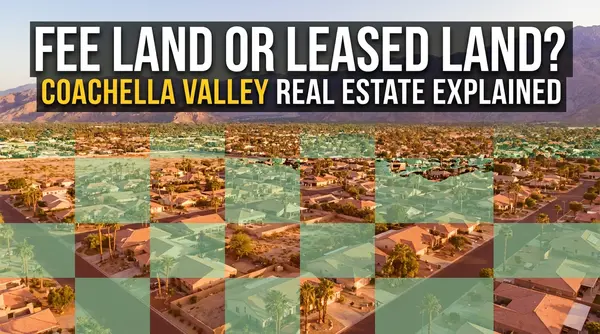
Some of the most desirable addresses in this valley sit on leased land. The house is yours. The dirt underneath it is not.
Two homes can be identical in every field an algorithm reads and be worth very different amounts, because one carries a land lease with a defined expiration and the other does not. Lenders treat them differently. Buyers treat them differently. The remaining term on that lease moves the number every single year.
No automated model I have seen handles this correctly. Some ignore it completely.
2. Which hole you are on, and whether you can see it
"Golf course frontage" is one data field. In reality it covers an enormous range.
A home on a quiet stretch of fairway with a double fairway view and mountains behind it is a different asset than a home backing a cart path near a tee box. Same course. Same community. Same square footage. Different buyers, different money.
An algorithm sees "on golf course, yes." It cannot see the view. It cannot see the noise. It cannot see where the afternoon sun lands.
3. Casita or no casita
A detached casita changes who buys the house. It is the difference between a couple, and a couple who host their adult kids, or a buyer planning to rent part of the year, or a buyer whose parents come for six weeks every winter.
Sometimes that casita is inside the square footage. Sometimes it is not. Sometimes county records list it as a guest house, sometimes as an ADU, sometimes not at all. The data is inconsistent, so the pricing built on it is inconsistent.
 4. HOA structure
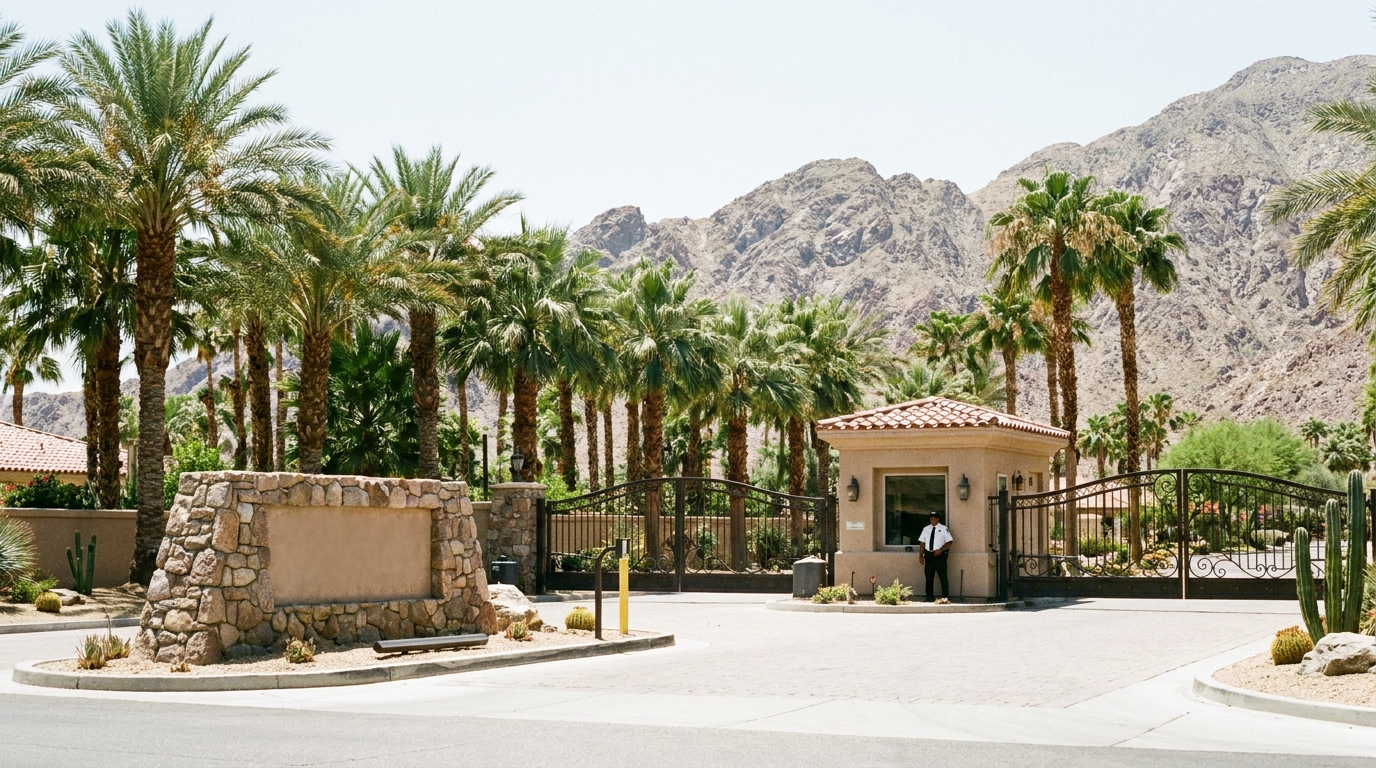
Two homes, both with dues. One pays $400 a month and that covers landscaping. The other pays $1,400 a month and that covers landscaping, cable, exterior paint, roof reserves, a guard gate, and a club minimum.
That is a thousand dollars a month of difference in what it costs to own the house. It absolutely changes what a buyer will pay. An automated model either does not have your dues figure or has a stale one, and it almost never knows what those dues actually cover.
I have watched this one item swing a valuation further than anything else on this list.
5. Views on identical floor plans
Walk a street where every third house is the same plan. Then stand in the back yards.
One looks at the Santa Rosas. One looks at a wall. Same plan, same year, same lot size, same everything an algorithm can read. The view home sells for meaningfully more, every time, and that gap is invisible in the data.
6. Comps that go stale in weeks
Our market runs on a season. Buyer activity in January is a different world from buyer activity in July. An algorithm leaning on sales from three or four months back is often reading a completely different market than the one you are about to list into.
With our inventory levels, a comp from the top of season can badly mislead you in August, and a comp from August can undersell you in January.
What the wrong number actually costs
Two ways, and they hurt differently.
If the estimate is high, you list high, you sit, and then you chase the market down. Every price reduction tells buyers something is wrong with the house. By the time you reach the right number, you have already spent the leverage you had in the first two weeks, which is exactly when serious buyers pay the most attention.
If the estimate is low, you take an offer you did not have to take. Nobody sends you a note telling you that happened. You just never find out.
There is a third version that shows up with out of area owners more than anyone. You look at a low estimate, decide the timing is bad, and hold the property another year while paying dues, insurance, utilities, and property tax on a house you rarely use.
What to do instead
Look at the estimate. Just do not let it be the last thing you look at.
Ask for the actual comparable sales, and ask why each one was chosen. A real comp analysis tells you which homes were used, what was adjusted, and by how much. If someone hands you a number without showing that work, the number is not worth much.
Ask about your specific community, not your city. La Quinta is not one market. Palm Desert is not one market. Country club communities behave differently from each other, sometimes dramatically, and none of that shows up in a city level number.
Ask what has sold in your community in the last ninety days, and what has not sold, and why. The listings that did not sell usually teach more than the ones that did.
If you own here and live somewhere else, I will pull that for you and walk you through it on the phone. No appointment to set up an appointment. No pressure to list anything. I would rather you have the real number and sit on it for three years than list on a bad one next month.
I write about this market on the blog and everything is open, no email form, no list to join. Take what is useful and ignore the rest.
Laura Lake | Your Desert Real Estate Partner | DRE #01455311
760-464-8138 | DesertRealEstatePartners.com
Categories
Recent Posts


GET MORE INFORMATION