Why Condos Are Getting Harder to Sell in La Quinta and Palm Desert in 2026
That is the part most sellers do not see coming. You can price correctly, stage well, and still watch offers fall apart at the lender, because of a rule written in Washington about your HOA’s balance sheet.
Steven Thomas devoted his entire August Riverside County housing report to condos this month. He titled it The Condo Conundrum. When the analyst who tracks this county month after month gives a full report to one property type, that is worth paying attention to.
Here is what is actually happening, and what it means if you own one.
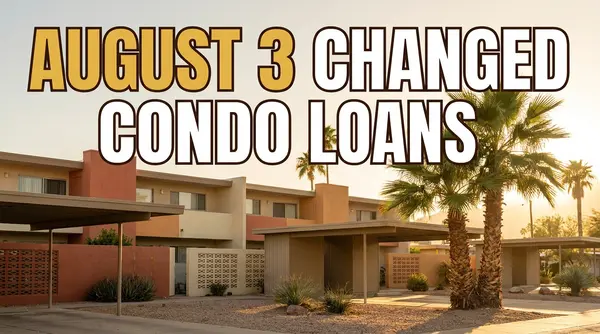
What changed on August 3
Fannie Mae and Freddie Mac tightened their condo project standards. Two pieces matter most.
First, limited review is gone. Limited review was the shortcut that let a lender approve a condo loan without digging deep into the association’s finances, budget, reserves, litigation history, and delinquency rate. For a well-run association it was a formality. It is no longer available, which means every condo loan now runs the full project review.
Second, reserve requirements are rising. The threshold moves to 15 percent of the annual budget in 2027. A lot of associations in this valley have historically run lean on reserves and covered big-ticket items with special assessments instead. That approach is about to become a financing problem for every seller in the community.
Neither of these is about your unit. Both of them can stop your sale.
Why this hits the desert harder than most markets
Condos are not a niche here. Walk through the country club communities in Palm Desert and La Quinta and a large share of what is for sale is attached product, much of it built decades ago, much of it governed by associations carrying aging infrastructure. Roofs. Private roads. Pools. Clubhouses. Perimeter walls.

A lot of these units are second homes, which means the owners are not in the room at HOA meetings and often do not know what is in the reserve study.
And HOA-related foreclosures nationally jumped nearly 40 percent as underfunded associations got more aggressive about collections. Delinquency rates feed directly into the same project review that now applies to every loan.
So you have older buildings, thin reserves, absentee owners, and rising delinquencies, all landing in a review process that no longer has a shortcut.
What this actually looks like in a transaction
You accept an offer. The buyer is qualified, the appraisal comes in fine, and then the lender requests the HOA questionnaire, the budget, and the reserve study.
The association reports reserves well under the threshold. Or there is pending litigation nobody mentioned. Or the delinquency rate is above the limit because a handful of owners stopped paying.
The loan does not close. Not because of your buyer, and not because of your condo.
At that point the seller has three options, none of them good: find a cash buyer, find a portfolio lender at a higher rate, or drop the price enough to make one of those work.
What to do if you own one
Get the HOA’s financials before you list, not after you are in escrow. Ask the management company for the current budget, the most recent reserve study, the reserve balance as a percentage of the annual budget, the delinquency rate, and any pending or threatened litigation. This is the same packet a lender will request. Reading it early is the entire advantage.
Find out whether your project is already on Fannie Mae’s unavailable list. Projects land there for specific, findable reasons. If yours is on it, you need to know that before you price, not three weeks into escrow.
If the reserves are thin, expect the cash-buyer conversation. That is not a reason to panic. It is a reason to price and market differently from the start, and to be honest with your listing agent about the runway.
If you are on the board or you have a vote, this is the year to care about the reserve study. Underfunding used to be a special assessment problem. It is now a resale value problem for every owner in the community.
The part I want you to hear
This is not a reason to sell in a hurry, and it is not a reason to sit still. It is a reason to find out where your association stands before you make any decision at all.
Most of the sellers I talk to who own condos here have never read their reserve study. That is completely normal, and it used to be harmless. It is not harmless anymore.
If you own a condo in La Quinta or Palm Desert and you are thinking about the next year or two, send me the name of your community. I will tell you what I can find about where it stands, with no obligation and no pitch attached.
Laura Lake | Your Desert Real Estate Partner | DRE #01455311
DesertRealEstatePartners.com | 760-464-8138
Categories
Recent Posts



GET MORE INFORMATION